How to Use a Commercial Blender for Efficient and Consistent Blending
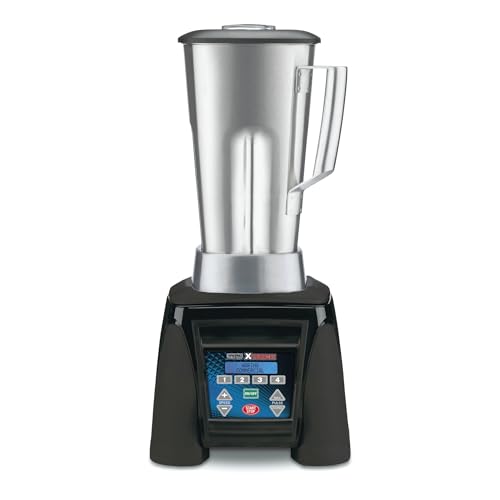
Waring Commercial MX1300XTS 3.5 HP Blender with 4 recipe programable LCD Display and a 64 oz Stainless Steel Container, 120V, 5-15 Phase Plug
Practical helper for commercial blender workflows: compact, straightforward, and easy to integrate.
Using a commercial blender effectively is essential for businesses like cafes, juice bars, and restaurants to ensure efficient and consistent blending results every time. Whether you’re preparing smoothies, soups, sauces, or dressings, mastering the use of commercial blending equipment can boost productivity and maintain product quality. This guide will walk you through the fundamentals, important factors to consider, step-by-step usage instructions, and practical tips to help you make the most of your commercial blender. Tools like the Waring Commercial MX1300XTS, known for its powerful motor and programmable settings, can be especially helpful in achieving your blending goals.
Disclosure: This article contains affiliate links. As an Amazon Associate, I earn from qualifying purchases.
Understanding Commercial Blending
Commercial blending refers to the process of using high-powered blending equipment designed for heavy-duty, frequent use in professional settings. Unlike household blenders, commercial blenders are built with durable materials, stronger motors, and advanced features to handle large batches and tougher ingredients efficiently.
Why does understanding commercial blending matter? Consistent blending texture, time efficiency, and ease of cleaning are critical for businesses that serve many customers daily. A reliable commercial blender minimizes downtime, reduces waste, and delivers uniform product quality, which is essential for customer satisfaction.
Key Considerations When Using a Commercial Blender
When choosing and using a commercial blender, consider these important factors:
Power and Performance
Commercial blenders like the Waring Commercial MX1300XTS feature high horsepower motors (e.g., 3.5 HP) that provide the necessary torque to blend tough ingredients smoothly and quickly. This power reduces blending time and helps produce uniform textures.
Programmable Settings and Controls
Blenders with programmable options allow you to save recipes and blending sequences, saving time and ensuring consistent results. The Waring MX1300XTS, for instance, includes four programmable beverage stations and an easy-to-clean electronic membrane keypad with a blue backlit LCD.
Capacity and Material
A 64 oz stainless steel container offers ample volume and durability for professional use, supporting large batches with minimal wear. Stainless steel containers also help with noise reduction and heat resistance.
Noise Level
Some commercial blenders come with sound enclosures for quieter operation, which is important in busy, customer-facing environments.
Cleaning and Maintenance
Smooth, easy-to-clean surfaces and components help reduce downtime and maintain hygiene standards in commercial kitchens. The Waring MX1300XTS’s keypad and container are designed for simple cleanup.
Compliance and Safety
Look for products that are ETL and NSF certified to meet health and safety regulations in commercial settings.
Step-by-Step Guide to Using a Commercial Blender
Using a commercial blender efficiently involves following a clear process:
- Prepare Ingredients: Chop or pre-cut ingredients to sizes suitable for blending to avoid strain on the motor.
- Load the Container: Add ingredients, starting with liquids to help create a vortex, followed by solids.
- Set the Controls: Use pre-programmed settings if available or select the appropriate speed and time.
- Secure the Lid: Make sure the lid is tightly sealed to prevent spills and accidents.
- Start Blending: Use pulse functions or continuous blending depending on the recipe.
- Monitor the Process: Listen for unusual sounds and check the consistency periodically.
- Stop and Serve: Once the desired texture is achieved, stop blending and pour out the contents.
- Clean Immediately: Rinse and clean container and parts promptly to prevent residue buildup.

Efficient blending in commercial setup
Practical Use Cases for Commercial Blending
Commercial blenders are versatile tools widely used in various professional kitchens:
- Making smoothies and frozen beverages quickly during peak hours
- Preparing pureed soups with uniform texture
- Blending sauces and dressings with consistent emulsification
- Creating nut butters or grinding tough ingredients efficiently
- Crafting specialty drinks with pre-programmed recipes for speed and uniformity
The Waring Commercial MX1300XTS, with its powerful motor and programmable stations, fits nicely in these workflows, helping streamline operations in busy settings.
Tips, Best Practices & Common Mistakes to Avoid
- Don’t overload the container: Overfilling can cause inefficient blending and may strain the motor.
- Add liquid first: This encourages faster, smoother blending by creating a vortex.
- Use pulse functions wisely: For chunkier textures or to prevent over-blending.
- Clean immediately: Avoid letting food dry in the container to prolong equipment life.
- Follow safety guidelines: Always use the sound enclosure if available to minimize noise-related distractions and injury risks.
- Avoid blending hot liquids at full speed: Let them cool slightly or start on lower speeds.
Where Waring Commercial MX1300XTS Fits Into Your Commercial Blender Workflow
The Waring Commercial MX1300XTS blender supports efficient commercial blending by combining power, programmability, and durability.
- Good fit when you need:
- Quiet operation in customer-facing areas
- Fast preparation of 75+ drinks or servings per day
- Multiple programmable recipes for consistent beverage quality
- Easy cleanup for high-traffic kitchens
- High-speed blending with up to 45,000 RPM pulses
Waring Commercial MX1300XTS 3.5 HP Blender with 4 recipe programable LCD Display and a 64 oz Stainless Steel Container, 120V, 5-15 Phase Plug
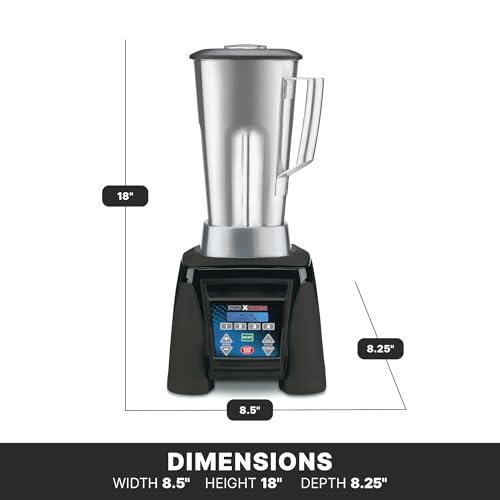
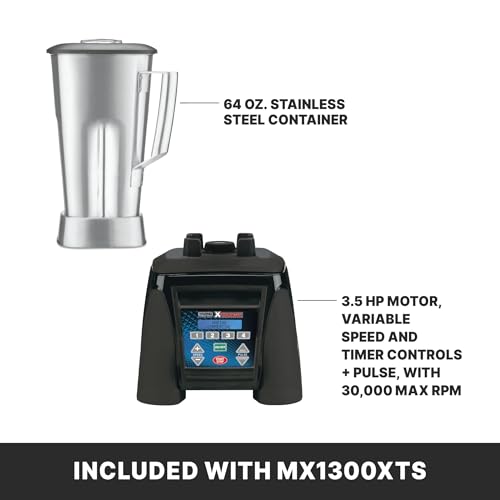

- Sound enclosure for quieter operation in busy environments
- Four programmable beverage stations for efficient prep
- Easy-to-clean electronic keypad with backlit LCD
- Recommended for high-volume use with 75+ drinks daily
- Powerful motor with max pulse reaching 45,000 RPM
- Dual pulse functions for versatile texture control
- ETL and NSF certifications for safety & compliance
Specs at a Glance
| Specification | Detail |
|---|---|
| Motor Power | 3.5 Horsepower |
| Container Capacity | 64 oz Stainless Steel |
| Programmable Stations | 4 |
| Max Pulse Speed | Up to 45,000 RPM |
| Controls | Electronic membrane keypad with blue backlit LCD |
| Sound Enclosure | Yes |
| Certification | ETL, NSF |
| Recommended Daily Use | 75+ drinks |
| Plug Phase | 5-15 Phase |
FAQ About Using a Commercial Blender
Q1: How long should I blend ingredients in a commercial blender?
A: Blending times vary by recipe and ingredients but usually range from 30 seconds to 2 minutes. Use short pulses initially, then continuous blending to reach desired consistency.
Q2: Can I blend hot liquids in a commercial blender?
A: Yes, but start blending on a low speed and ensure the lid vent is open or slightly ajar to allow steam to escape safely.
Q3: How do programmable settings improve blending efficiency?
A: Programmable settings save specific blend times and speeds for common recipes, providing consistent results and saving time during busy periods.
Q4: What cleaning steps are recommended for commercial blenders?
A: Rinse immediately after use, disassemble removable parts, and wash with warm soapy water. Use manufacturer cleaning guidelines to maintain warranty and hygiene compliance.
Q5: What safety features should I look for in a commercial blender?
A: Look for sound enclosures to minimize noise, secure lids with locks, and certifications like ETL and NSF to ensure compliance with safety standards.
Q6: Why choose a stainless steel container over plastic?
A: Stainless steel containers handle heat better, reduce noise, and offer greater durability compared to plastic, making them ideal for commercial use.

Efficient maintenance for commercial blending
Conclusion
Mastering how to use a commercial blender for efficient and consistent blending can transform your kitchen workflow, improving product quality and customer satisfaction. By focusing on the right practices—from ingredient prep to cleaning—and leveraging features like programmable controls and powerful motors, you can streamline your operations. The Waring Commercial MX1300XTS with its robust 3.5 HP motor, programmable LCD display, and sturdy build is a valuable tool for busy commercial kitchens. Explore its features and consider integrating it into your blending setup to boost efficiency and consistency.
Ready to Boost Your Blending Efficiency?
Discover how this Waring Commercial MX1300XTS 3.5 HP Blender can streamline your commercial blending tasks.